
The surface doesn’t stay in one tone. It shifts as you move past it. Blue tiles catch the light, then dull slightly, then brighten again from a different angle. The patterns don’t settle into something you can follow for long.
The street holds a quiet rhythm. Footsteps, a door opening, something set down inside a nearby room. The sound doesn’t carry far.
Nothing feels fixed, even when it looks still.
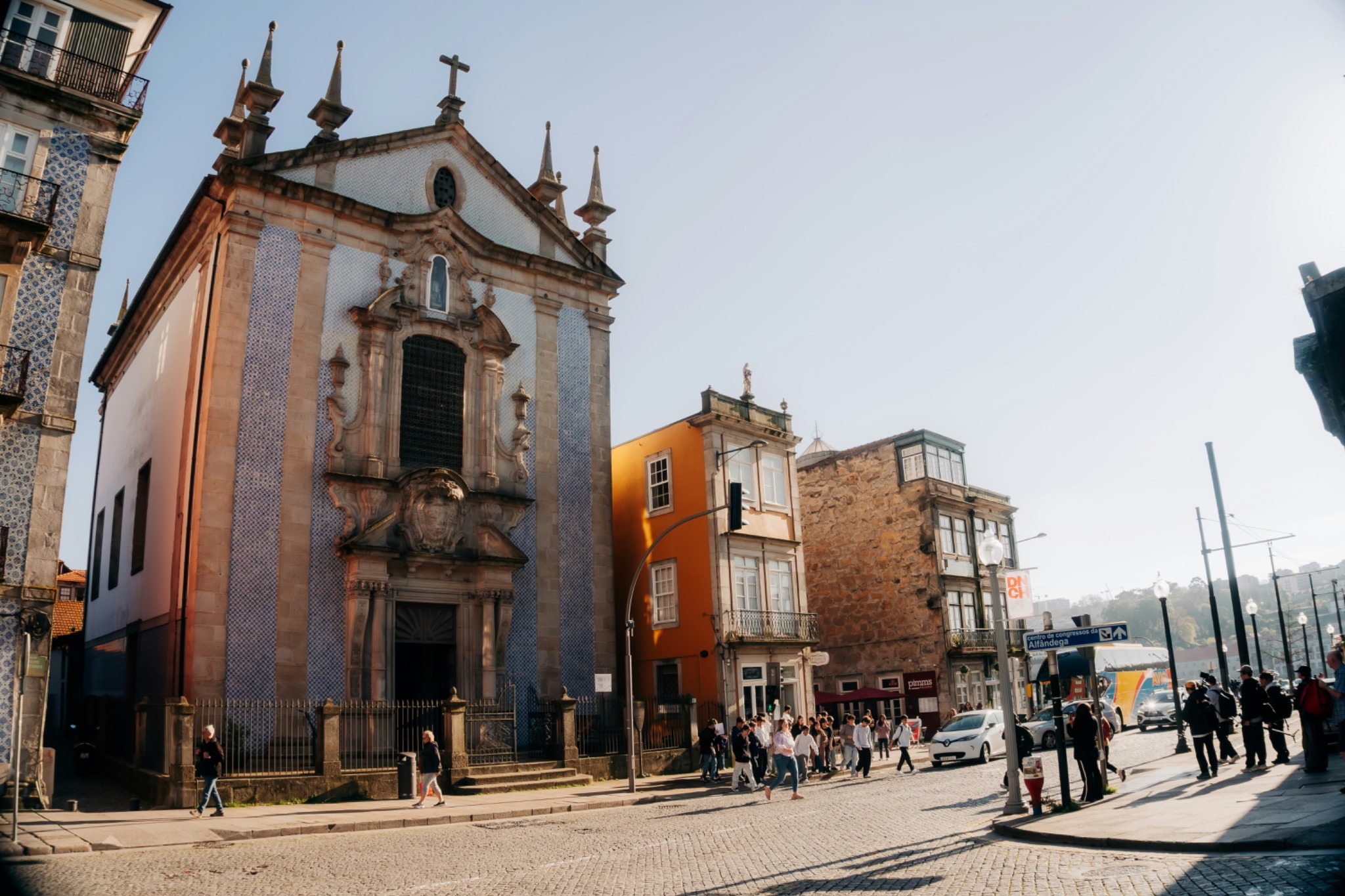
Porto gathers through detail rather than scale. The facades sit close together, though each one feels slightly separate. Tiles cover the surfaces in patterns that repeat, then break, then continue again without warning.
The colour changes with the light. Deep blue, then pale, then something almost grey where shadow holds longer.
Folded into a pocket map someone studies briefly, Lisbon to Porto train appears among other routes, then disappears as the page is turned.
The street continues.
What the Surfaces Reflect
The tiles don’t hold a single image. They reflect light unevenly, creating fragments that shift as you move.
You notice small details without deciding to. A line, a crack, a pattern that almost repeats but doesn’t quite.
Across a small departures board inside a nearby doorway, the Madrid to Seville train scrolls past, then vanishes before it becomes anything more than a passing reference.
Nothing interrupts the space.
When the Pattern Breaks
The direction doesn’t remain steady. A narrow street opens into a wider one, then closes again without marking where it changed.
You move forward, though it doesn’t feel like progression. The surroundings adjust around you.
You don’t follow a clear route.
The Turn You Don’t Mark
At some point, something shifts. The textures change. The colour fades slightly. The air feels warmer.
You don’t notice when it begins. Only that it already has.
The rhythm stays, though it feels different.
Where the Gold Emerges
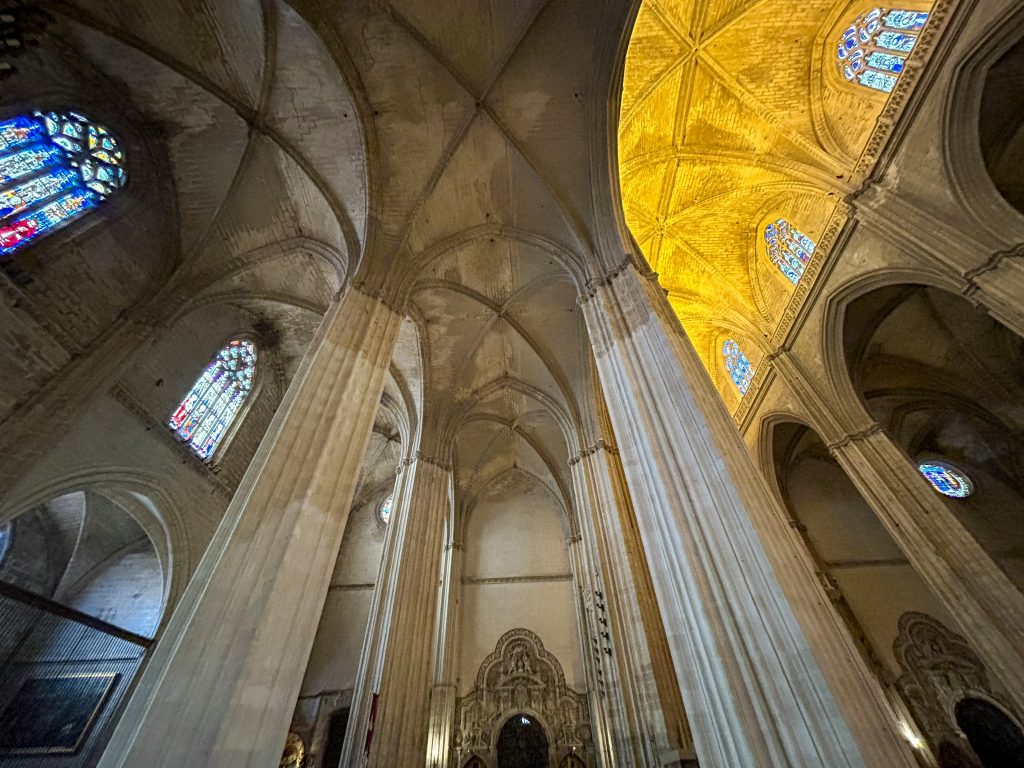
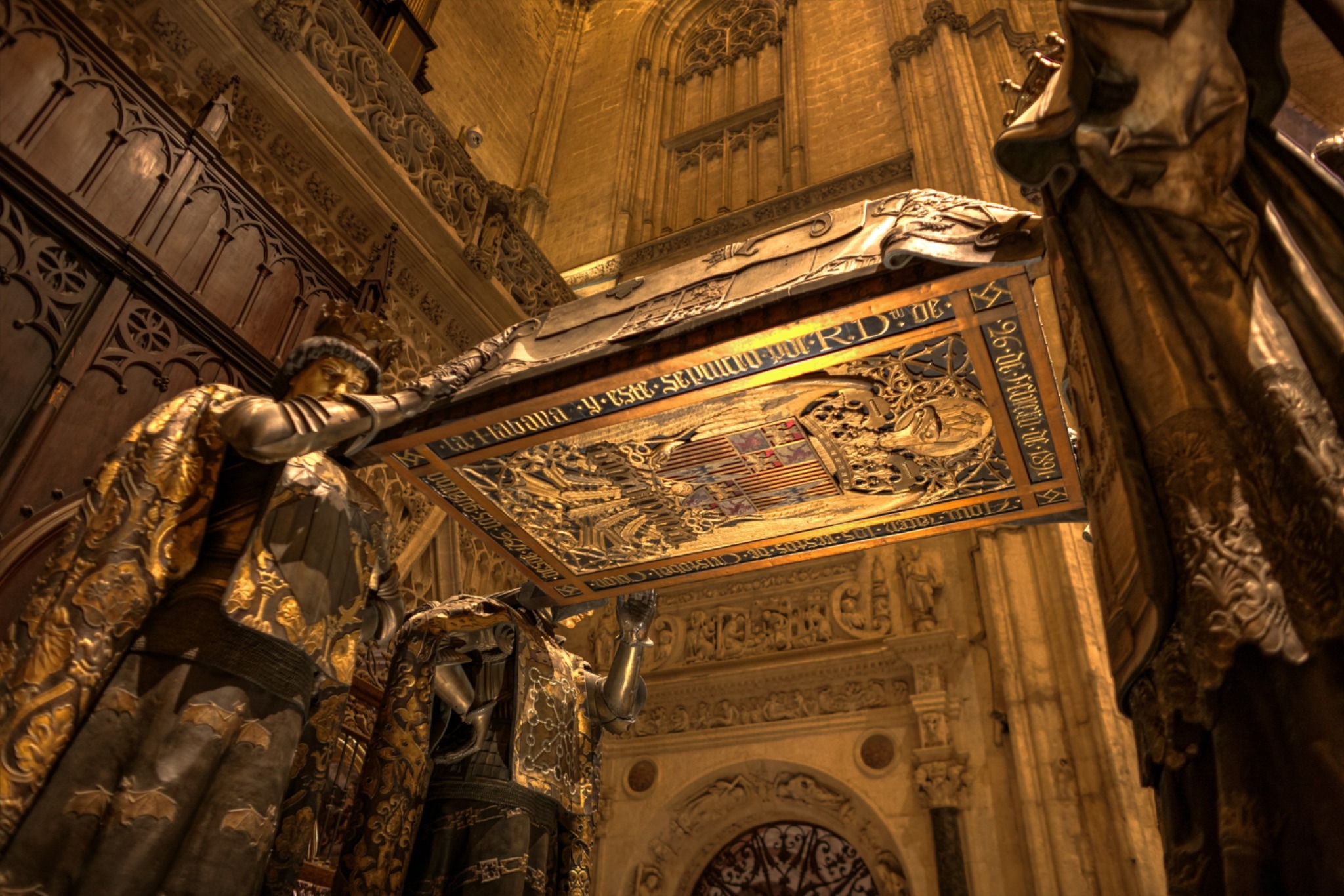
Seville gathers inward before opening upward. The interiors hold more than the streets suggest. The altar doesn’t appear all at once. It builds through detail, then reflection, then something brighter that draws your attention without asking for it.
Gold catches the light and holds it longer. The surface feels less fragmented, though still shifting in smaller ways.
You don’t see it fully at once.
What the Details Hold Back
The structure doesn’t explain itself clearly. You notice one figure, then another, though neither stays long enough to define the whole.
Patterns appear, then dissolve into something more complex. The surface feels continuous, though it doesn’t settle into a single form.
Light moves across it slowly.
Between Stillness and Depth
The space feels quieter, though not silent. Movement exists, though it doesn’t disturb what’s already there.
You step forward, then pause, then continue without marking the moment.
The depth becomes more noticeable the longer you stand there.
Where the Interior Expands
Beyond the immediate view, the space extends further than expected. The structure continues, though not in a straight line.
The edges soften. The boundaries between sections become less clear.
You don’t decide where to stop looking.
What Doesn’t Fully Separate
The difference between Porto and Seville doesn’t organise itself clearly. One feels defined by surface, the other by depth.
Still, they connect through the way light moves across them.
You notice it gradually.
What Remains in Fragments
It isn’t only the images that stay with you. It’s the way they appeared. Briefly, then differently, then gone again.
Those moments don’t align into something complete. They remain slightly out of place, though not disconnected.
You recognise them later.
After the Light Shifts Away
Looking back, the details don’t return in order. The tiles, the gold, the shifting space between them don’t form a sequence you can follow.
They appear in fragments. A colour, a reflection, a surface that changed depending on where you stood.
You don’t try to organise it.
It continues beyond what you remember, not as a complete image, but as something still in motion.