
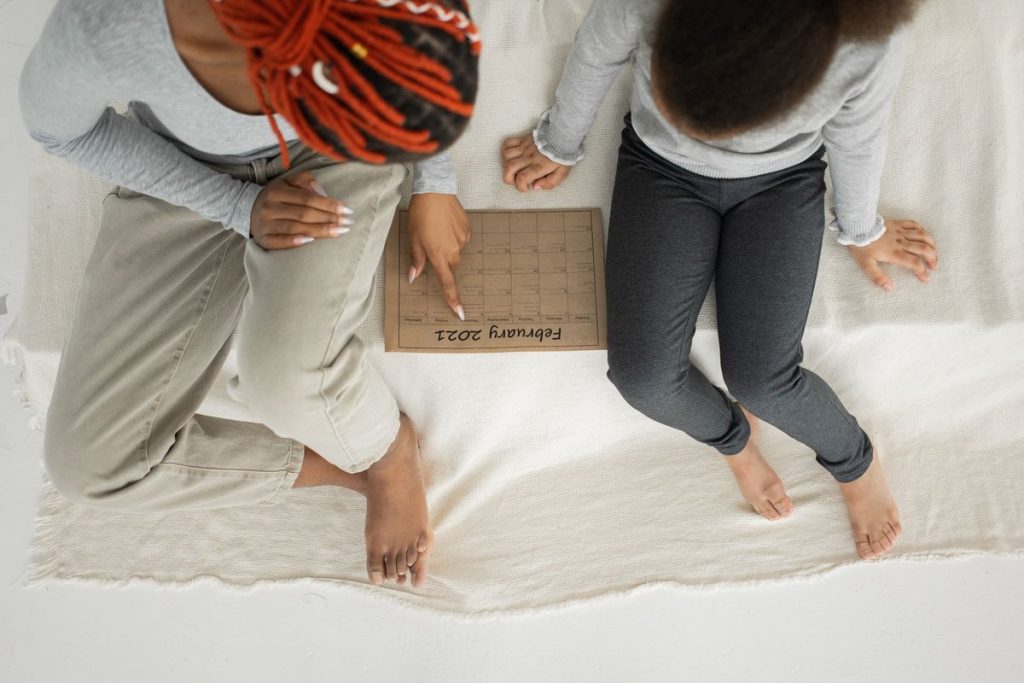
Getting children interested in astronomy doesn’t always mean buying a telescope or finding a complicated science activity. Sometimes it can start with something as ordinary as a calendar. The Moon is changing all the time. The amount of daylight changes. The Sun doesn’t set in exactly the same place throughout the year. There are patterns everywhere, but children don’t always notice them because nobody has given them a reason to look. A calendar can help with that.
Start with the Moon
The easiest one is probably the Moon. Ask a child to look at it tonight. Then ask again tomorrow. After a few days, it starts to look different. A simple Moon diary can make this even more interesting. A notebook works perfectly well. Each night, children can draw the Moon as they see it and write down the date. There’s no need for perfect drawings or complicated measurements. Just look. Draw. Come back tomorrow.
NASA has a similar approach in its Moon observation activities, encouraging children to watch the Moon and record what changes over time. After a couple of weeks, there’s usually something to talk about. Why is it getting bigger? Why does it look like a half circle now? Why was it difficult to see yesterday? That’s where the science lesson starts without really feeling like one.
The Sun Can Be Tracked Too
The same idea works with the Sun, although obviously children should never look directly at it. Pick a safe spot outside and notice where the Sun sets. Check again a few weeks later. It has moved.
Another easy activity is shadows. Put a stick somewhere outdoors and mark where the end of its shadow falls at different times. The shadow changes as the Sun appears to move across the sky. It’s a very basic experiment, but children can actually see something happening. A simple sundial takes the idea a little further. There are plenty of versions that can be made with things already lying around the house. This is also a good point to talk about why daylight doesn’t stay the same all year.
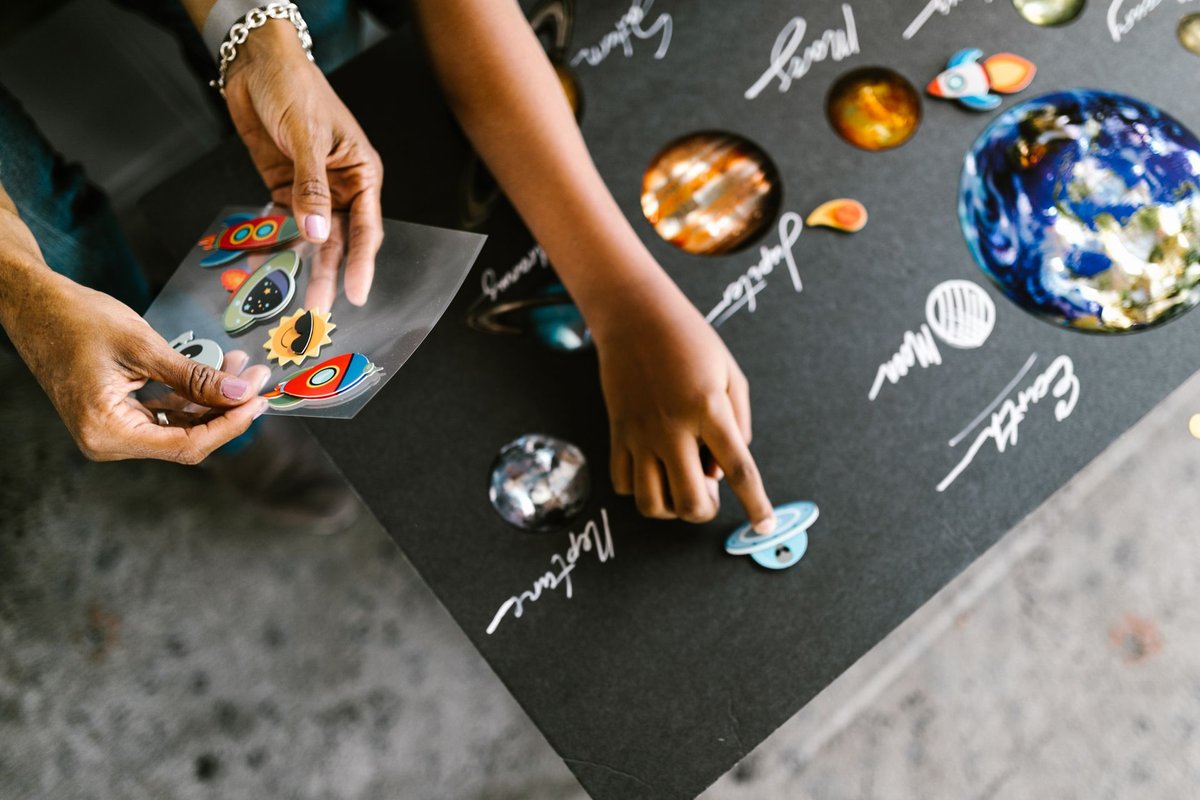
Why Do We Have Different Calendars Anyway?
This is where things get a little more interesting. Most children are familiar with the calendar hanging on the fridge or sitting on a phone. That’s the Gregorian calendar, which is based on the solar year. But the Moon has its own cycle.
A lunar month is roughly 29.5 days, so twelve lunar months don’t equal a full solar year. This means a purely lunar calendar moves through the seasons over time. There are also lunisolar calendars. These use the Moon to determine the months but make adjustments to stay in step with the solar year.
Children don’t need to learn all the calculations. Putting two calendars next to each other is often enough. Track the Moon on one. Look at the regular calendar on the other. After a while, the difference between the two systems becomes much easier to understand.
And Different Cultures Have Their Own Ways of Tracking Time
This part can open up a whole different conversation. The Islamic Hijri calendar is a lunar calendar. Its months follow the lunar cycle, so Islamic months move through different seasons over the years. Ramadan and other Islamic observances are based on this calendar. For families observing Ramadan, looking at the expected dates and prayer schedules for Ramadan 2027 can be a practical way to explain why Ramadan does not fall in the same season every year. That one question – “Why does the date keep changing?” – can lead into lunar months, solar years, the Moon’s cycle and the way different calendar systems work.
The Hebrew calendar works differently. It’s lunisolar, so it follows lunar months but also makes adjustments to stay connected with the solar year. Traditional Chinese calendars are also lunisolar and are still important for cultural celebrations and traditional observances.
There are similar examples elsewhere. Many Hindu calendar systems use solar or lunisolar methods depending on the region and tradition. A number of Buddhist calendars are lunisolar too. So there’s actually quite a lot for children to explore here. Not every culture has looked at time in exactly the same way, and that difference is part of what makes the subject interesting.
Make It a Small Project, Not Homework
This doesn’t need to become another worksheet that ends up forgotten in a school bag. Give the child a notebook. That’s enough. For a month, record the Moon. Maybe write down when it gets dark. Notice where the Sun sets. Mark anything unusual.
Older children can go a little further. They can compare the length of a lunar month with the solar year or work out approximately how many lunar cycles fit into one year. NASA’s Jet Propulsion Laboratory has a Moon Phases Calendar and Calculator activity that lets children make a simple model and use it to understand the changing phases.
Calendars can also connect these ideas to things children already see happening at home. And that’s probably enough for one afternoon. No telescope. No expensive kit. Just a calendar, a notebook, and a reason to look up.